

Bone loss rarely announces itself. There’s no ache that shows up the week your skeleton starts thinning, no bruise, no obvious signal that anything has changed. For the millions of Americans managing a thyroid condition, that silence is exactly what makes the connection between thyroid disorders and bone health so easy to overlook. Your endocrinologist checks your TSH, your T3, and your T4. Almost nobody checks your bones, even though thyroid conditions are among the more common, better-documented causes of weakened bones in adults under sixty-five. That gap in routine care is the reason this article exists.
Here in the United States, thyroid disease affects an estimated 20 million people, and the American Thyroid Association believes up to 60% of them don’t even know they have a problem. Layer bone loss on top of that number, and you get a picture that should concern anyone managing a thyroid condition, whether it’s Hashimoto’s, Graves’ disease, a nodule that’s being watched, or thyroid cancer that’s already been treated. Bone loss tied to thyroid disorders isn’t rare. It’s just rarely discussed, and that’s a very different thing.
This guide walks through exactly how thyroid disorders drive skeletal thinning, who faces the highest risk, the warning signs worth paying attention to, and how modern, radiation-free bone density testing makes it possible to catch bone loss long before a fracture forces the issue.
What Is Bone Loss, and Why Do Thyroid Disorders Make It Worse?
Bone loss happens when the body breaks down old bone tissue faster than it can rebuild new tissue. Your skeleton is not a fixed structure sitting quietly inside you. It’s live tissue, constantly being dismantled and rebuilt in a cycle that repeats every few months, powered by two types of cells: osteoclasts, which clear away old bone, and osteoblasts, which lay down new bone in its place. In a healthy adult, that cycle stays roughly balanced.
Thyroid disorders disrupt that balance in a fairly specific way. Thyroid hormone controls the speed of the entire remodeling cycle, and when that speed changes, whether it’s sped up by excess hormone or knocked off track by medication, the breakdown side tends to outpace the rebuilding side. That mismatch, repeated over months and years, is what shows up on a scan as measurable bone loss.
None of this means a thyroid diagnosis guarantees bone problems. Plenty of people manage a thyroid condition for decades without ever developing weak bones. But the risk is real enough, and common enough, that it deserves a place in the conversation you have with your provider, not a footnote you stumble across years later.
How Hyperthyroidism Drives Bone Loss
Hyperthyroidism, an overactive thyroid producing too much hormone, is the most aggressive driver of bone loss among thyroid conditions. Excess hormone speeds up the entire remodeling cycle, sometimes cutting the normal timeline nearly in half. That sounds efficient on paper. In practice, the breakdown phase accelerates more than the rebuilding phase can keep up with, and the result is a real, measurable loss of bone that compounds with every cycle.
Research on this connection goes back decades. A widely cited meta-analysis by Vestergaard and Mosekilde found that a history of hyperthyroidism carries a meaningfully elevated risk of hip and other fractures, and that risk can persist even years after thyroid hormone levels have been corrected. That last detail matters enormously. Damage to the skeleton that happens during a period of uncontrolled hyperthyroidism doesn’t necessarily reverse itself the moment your labs go back to normal.
Graves’ disease, the autoimmune condition behind most hyperthyroidism cases, deserves special mention. Its early symptoms, a racing heart, unexplained weight loss, feeling unusually warm, and restlessness, often get blamed on stress or a busy schedule. Months or even years can pass before diagnosis, and every one of those months is time spent with the skeleton locked in that accelerated, imbalanced remodeling state.
Subclinical Hyperthyroidism: The Quiet Trigger
This is the part of the story that surprises the most patients. You don’t need dramatic, textbook hyperthyroidism to be at risk of weaker bones. Subclinical hyperthyroidism, where TSH runs low but thyroid hormone levels still test within a technically normal range, has been linked in multiple prospective studies to reduced bone mineral density and elevated fracture risk, particularly in postmenopausal women.
Here’s the piece almost nobody explains clearly: TSH itself acts directly on bone cells, independent of its role in signaling the thyroid gland. A landmark study published in the journal Cell demonstrated that TSH functions as a direct brake on skeletal remodeling. When TSH drops, even with every other thyroid number looking fine, that brake loosens, and bone loss can already be underway in someone who has never once been told their thyroid hormone is too high.
Hypothyroidism, Medication, and Bone Loss
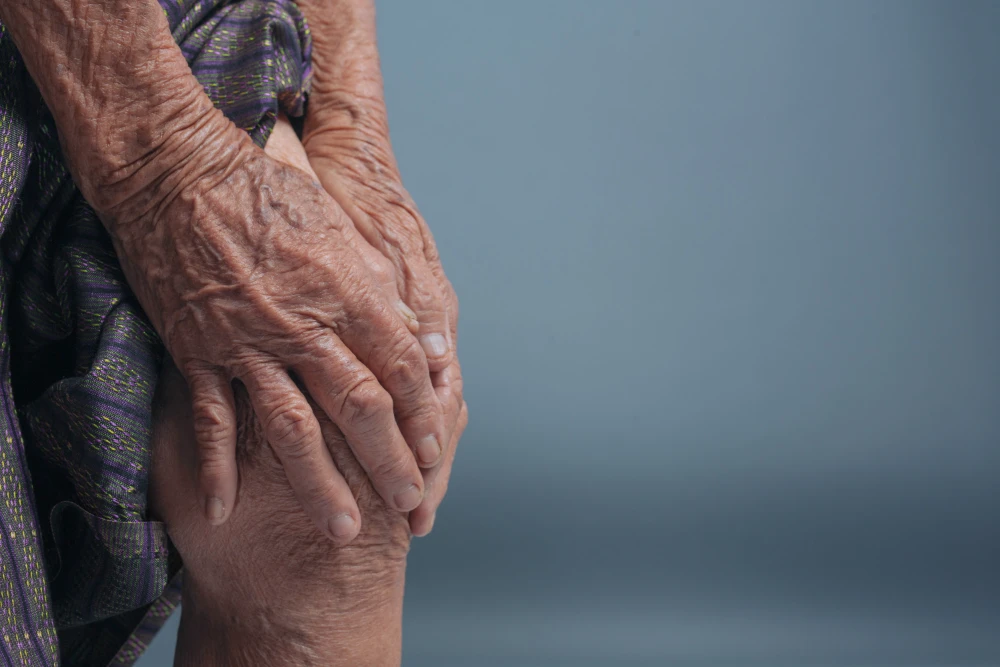
Hypothyroidism, an underactive thyroid, tells a more complicated story. Left untreated, it actually slows bone remodeling rather than speeding it up, which sounds protective in the short term. It isn’t a reason to skip treatment. Untreated hypothyroidism brings its own serious risks, including cardiovascular strain and, in severe cases, a life-threatening complication called myxedema.
Where bone loss becomes relevant again for hypothyroid patients is on the treatment side, and this is arguably the most overlooked chapter in the entire discussion, because it affects people who are doing everything their doctor asked.
When Thyroid Medication Overshoots
Levothyroxine is one of the most commonly prescribed medications in the country, and at the correct dose, it’s safe and effective. But if the dose runs even slightly high, pushing TSH below normal, the patient ends up in a state that looks a lot like subclinical hyperthyroidism on lab work, with the same downstream effect on the skeleton.
This shows up most often in two groups. Thyroid cancer survivors on TSH-suppressive therapy, an approach where doctors intentionally keep TSH low to reduce recurrence risk, are one. A systematic review published in the Journal of Clinical Endocrinology and Metabolism found that TSH suppression therapy was associated with measurably reduced bone mineral density, an effect more pronounced in postmenopausal women.
The second group is far larger: everyday hypothyroid patients whose levothyroxine dose hasn’t been rechecked in years. A dose that was correct five years ago may not fit anymore after weight changes, aging, a new medication, or even a switch in generic formulation. Without regular TSH monitoring, it’s entirely possible to drift into mild over-replacement and quiet skeletal thinning for a long stretch of time without a single symptom to flag it.
Bone Loss by the Numbers: What the Research Actually Shows
It helps to see the scale of this rather than just take it on faith. Osteoporosis alone affects roughly 10 million Americans, with another estimated 43 million living with low bone mass, according to the National Osteoporosis Foundation’s frequently cited figures. Thyroid disease affects a comparable share of the population, and the two groups overlap heavily among postmenopausal women, the single largest at-risk demographic for both conditions.
A meta-analysis of prospective cohort studies examining subclinical thyroid dysfunction found a statistically significant association between low TSH and both reduced bone mineral density and higher fracture incidence. Separate research into TSH-suppressive therapy for thyroid cancer patients found bone density reductions substantial enough that several clinical guidelines now recommend baseline and follow-up bone scans for patients on long-term suppressive doses. None of these numbers are meant to alarm anyone unnecessarily. They’re meant to show that the link between thyroid disorders and bone density loss isn’t a fringe theory. It’s an established, peer-reviewed pattern that simply hasn’t made its way into everyday patient conversations yet.
Who Faces the Highest Risk of Bone Loss From Thyroid Disorders?
A handful of patterns show up again and again in patients dealing with both thyroid conditions and weakening bones:
- Postmenopausal women, since declining estrogen already accelerates skeletal loss on its own, and a thyroid imbalance compounds the effect.
- Thyroid cancer survivors on long-term TSH-suppressive therapy, where the low TSH is intentional rather than a dosing mistake.
- Anyone with a long, undiagnosed stretch of hyperthyroidism, particularly untreated Graves’ disease.
- Levothyroxine patients who haven’t had a TSH test in over a year.
- People with additional risk factors for weak bones include a family history of osteoporosis, a smaller body frame, smoking, or long-term steroid use.
- Older men are frequently overlooked because both thyroid disorders and bone loss carry an outdated “women’s issue” stereotype that leaves male patients under-screened.

Warning Signs of Bone Loss You Shouldn’t Brush Off
Weakening bones and thyroid conditions share an unfortunate trait: both can progress for years with almost no obvious symptoms. An overactive thyroid might cause fatigue, anxiety, or a racing heart, none of which point toward the skeleton. Bone loss itself typically causes no pain at all until a fracture happens.
Still, a few subtle clues are worth taking seriously if you have any thyroid disorder. A gradual loss of height over a few years. A new stoop or rounding in posture. Back pain that doesn’t have an obvious cause. A fracture from a fall that shouldn’t have been serious enough to break a bone. Any one of these, combined with a thyroid diagnosis, is a good reason to raise the subject of your bone health directly with your provider rather than waiting for it to surface on its own.
Plenty of patients spend years chalking up a shrinking height or a nagging ache between the shoulder blades to “just getting older,” only to learn later that a thyroid imbalance had been quietly thinning their skeleton the entire time. The upside is that, unlike a fracture, a low bone density reading gives you time to act before the worst happens.
Protecting Against Bone Loss When You Have a Thyroid Disorder
The encouraging part of this whole discussion is that bone loss tied to thyroid disorders is manageable, not just something to worry about passively.
Get TSH checked regularly, not only at diagnosis. Most endocrinologists recommend rechecking every six to twelve months once you’re stable on medication, sooner after any dose change. If you’re on TSH-suppressive therapy, ask specifically how that tradeoff is being weighed against your bone health.
Request a baseline bone density scan if you fall into any of the higher-risk categories above. A baseline gives you something concrete to compare against later instead of guessing whether bone loss has started.
Prioritize calcium, vitamin D, and protein. Most adults need roughly 1,000 to 1,200 milligrams of calcium daily and 600 to 800 IU of vitamin D, though your provider can tailor that to your labs. These building blocks support bone health for anyone, and they matter even more when a thyroid condition is already putting strain on the remodeling cycle. Weight-bearing exercise, walking, hiking, and light resistance training send bone tissue a direct signal to keep rebuilding, and even modest daily movement makes a measurable difference over a year.
Cut back on habits that quietly work against your skeleton. Smoking and heavy alcohol use are both independently linked to weaker bones, and the effect compounds when a thyroid imbalance is already accelerating the process. Excess caffeine and very high sodium intake can nudge calcium loss too, though the effect is smaller and mostly relevant if other risk factors are already stacked against you.
Never adjust thyroid medication without medical guidance. It’s tempting, once someone understands how weakening bones connect to thyroid disorders, to want to lower a dose preemptively. Don’t. Undertreated hypothyroidism carries its own serious risks, and any change should happen through a lab-guided conversation with your provider.

Catching Bone Loss Early With REMS Technology
Because bone loss develops silently, monitoring is really the only defense that works. Traditional DEXA scanning has been the standard for years, but it uses ionizing radiation and usually means a separate trip to a hospital or imaging center, one more appointment layered onto an already full schedule of endocrinology visits and lab draws.
REMS, short for Radiofrequency Echographic Multi-Spectrometry, offers a radiation-free way to track bone density that fits especially well for anyone managing a thyroid condition, since it can be repeated as often as your provider wants without any cumulative radiation exposure to worry about. Studies comparing REMS directly against DEXA have found a strong correlation between the two, with sensitivity and specificity both above 90 percent. A REMS scan also produces a Fragility Score, a measure of bone quality rather than density alone, giving a fuller picture of fracture risk than density numbers by themselves.
Superior Bone Scanning brings REMS technology directly to your home or office as Los Angeles’s most trusted mobile REMS bone scanning provider. Patients across the area rely on this service specifically because it removes the extra appointment from an already crowded calendar. A scan takes under two minutes, involves zero radiation, and gives you and your endocrinologist real data on whether bone density has already started slipping, rather than waiting to find out through a fracture.
What Happens During a REMS Scan
The process is simpler than most first-time patients expect. A technician arrives with a portable, ultrasound-style probe. No gown, no changing room, no lying still inside a machine for twenty minutes. You lie comfortably on a table, or even your own couch, while the probe passes gently over the hip and lower spine. Within a couple of minutes, the scan produces data comparable to a traditional DEXA. Results are explained in plain language, not handed over as a T-score with no context, so you understand exactly where your bone health stands and what, if anything, needs to happen next.
Booking tends to be far less complicated than patients expect, too. Most appointments are scheduled within a week, and the visit itself fits into a lunch break, a quiet stretch between meetings, or a Saturday morning without anyone needing to rearrange a whole day around it. That convenience matters most for people already juggling a thyroid condition, since one more errand tacked onto a packed calendar is usually the reason bone density testing gets postponed in the first place.
Removing that friction is a large part of why searches for a bone density scan near me keep climbing across Los Angeles, and why a growing number of endocrinologists now mention mobile REMS testing as an option worth exploring rather than treating a scan as something that only happens after a fracture.
Don’t Let Bone Loss Go Unmonitored
Managing a thyroid disorder already takes real effort: medication schedules, lab draws, symptom tracking. Bone loss deserves a place in that routine, not a spot on the back burner. It’s a documented, well-researched risk, not a rare complication reserved for extreme cases, and awareness is genuinely the first step toward catching it early.
At Superior Bone Scanning, that first step is built to be easy. Radiation-free REMS technology comes straight to your door anywhere in Los Angeles, with results explained in plain language and, when it’s useful, shared with the provider already managing your thyroid care. If weakening bones have been a nagging thought you keep putting off, let today be the day that changes.
Ready to Check for Bone Loss? Book Your REMS Scan Today
Thyroid disorders and bone loss are connected far more often than most patients realize, and the only way to know where you personally stand is to test rather than guess. Superior Bone Scanning brings radiation-free REMS technology directly to homes and offices across Los Angeles, with fast results and clear answers. Book your mobile bone density scan today, and stop wondering whether bone loss has already started.
Can thyroid disorders actually cause bone loss?
Yes. Both hyperthyroidism and overtreated hypothyroidism, where TSH gets pushed too low by medication, can speed up bone breakdown faster than the body can rebuild it, leading to a measurable loss of bone density and higher fracture risk over time.
Does hypothyroidism cause bone loss too?
Untreated hypothyroidism tends to slow bone turnover rather than accelerate it. The real risk for hypothyroid patients comes from levothyroxine over-replacement, where the dose runs slightly high and TSH drops too low, producing effects on the skeleton similar to hyperthyroidism.
What is subclinical hyperthyroidism, and how does it relate to bone loss?
It’s a condition where TSH is low, but thyroid hormone levels still test within a normal range. Despite looking mild on paper, research links it to reduced bone density and higher fracture risk, especially in postmenopausal women.
I’m a thyroid cancer survivor on suppressive therapy. Should I worry about bone loss?
It’s worth discussing with your care team. TSH-suppressive therapy is often medically necessary to reduce recurrence risk, but studies show it can also reduce bone density, particularly in postmenopausal women. A baseline scan and periodic monitoring are reasonable steps.
How often should TSH be checked to catch bone loss early?
Most endocrinologists recommend testing every six to twelve months once stable on treatment, sooner after any dose adjustment. Regular monitoring is the main way to prevent over-replacement and the skeletal thinning that follows it early.
Should someone with a thyroid disorder get a bone density scan?
If you’re postmenopausal, have had hyperthyroidism for an extended period, are on TSH-suppressive therapy, or have been on levothyroxine for years without a recent dose review, a baseline bone density scan is a reasonable, often skipped step.
Is REMS scanning safe to repeat often when monitoring bone loss?
Yes. REMS uses ultrasound-based radiofrequency signals rather than X-rays, so there’s no ionizing radiation involved, which makes it well-suited to the repeated monitoring that thyroid patients often need.
Does Superior Bone Scanning coordinate results with an endocrinologist?
Results are explained in clear, plain language that patients can bring to or share with the provider managing their thyroid care, so skeletal health becomes part of the same conversation as thyroid treatment rather than a separate, forgotten issue.