

An Echolight scan in California isn’t easy to find, as it is a newly introduced technology. DEXA machines are everywhere across the state, but this newer, radiation-free technology has stayed limited to a small handful of providers, leaving a real gap for anyone who specifically wants it.
Superior Bone Scanning closes that gap. Built on REMS, or Radiofrequency Echographic Multi Spectrometry, an Echolight scan in California is now available as a mobile service brought directly to homes and offices throughout Los Angeles and the surrounding area. No X-rays, no imaging center, and no long wait for an opening.
Here’s what’s worth knowing before booking: how an Echolight scan in California compares to a standard DEXA test, who it makes the most sense for, and where to actually get one.
What Is an Echolight Scan?
Echolight is the name of the medical device manufacturer behind REMS technology, and an Echolight scan is simply the bone density test performed using their equipment. Instead of the low-dose X-ray beams a traditional DEXA machine uses, an Echolight scan relies on ultrasound-based radiofrequency signals that pass through the hip and lumbar spine, analyzing the internal structure of bone without any ionizing radiation at all.
The device itself is portable, which is a meaningful departure from the large, fixed DEXA units found in hospital radiology departments. That portability is exactly what makes an Echolight scan in California possible as a mobile service in the first place. A technician brings the equipment to the patient rather than the other way around, and the scan itself takes only a couple of minutes once the probe is positioned.
Why California Residents Are Searching for an Echolight Scan
There’s a real, documented demand here, not just theoretical interest. Patient forums and osteoporosis support communities regularly include posts asking specifically about REMS or Echolight availability in California, often from people who heard about the technology through a doctor, a friend, or research they did after a concerning DEXA result. Some of those threads go unanswered for months, which says a lot about how underserved this search has been.
Part of the appeal is straightforward: no radiation exposure matters to pregnant patients, to people who’ve already had significant lifetime radiation from other medical imaging, and to anyone who’s simply uncomfortable with the idea of X-rays for a routine screening. Part of it is convenience, since a mobile Echolight scan in California means skipping the drive, the waiting room, and the need to take time off work for an appointment that used to require all three. And part of it is accuracy for populations where DEXA has known blind spots, which is worth its own explanation.
How Accurate Is an Echolight Scan Compared to DEXA?
This is usually the first question anyone asks once they’ve found a provider, and it’s a fair one. A newer technology only matters if it actually works.
The research here has grown substantially. A multicenter study published in Aging Clinical and Experimental Research found REMS achieved sensitivity above 91 percent and specificity above 91 percent when measured directly against DEXA, with a strong statistical correlation between the two methods across a large patient sample. That’s a meaningful validation for a technology that’s still relatively young compared to DEXA, which has had decades to build its evidence base.
Research has also looked specifically at situations where DEXA tends to struggle. A study in Osteoporosis International followed patients before and after total hip replacement and found that only about 2.8 percent of the change in bone density readings could be attributed to the metal implant itself, with roughly 90 percent of the variation explained by ordinary patient factors like age, sex, and body mass index.
Separate research in Calcified Tissue International found that REMS tends to avoid the tendency DEXA has to overestimate bone density when structural complications like vertebral fractures or vascular calcification are present. None of this means the science is finished, and reputable studies are careful to call for continued validation, but the direction of the evidence is consistent and reassuring.
What Makes an Echolight Scan Different From a Traditional Bone Density Scan
Beyond the radiation-free part, which tends to get the most attention, an Echolight scan in California differs from a standard DEXA appointment in a few practical ways worth knowing before booking.
There’s no gown, no lying still under a mechanical arm, and no imaging center at all if the scan happens at home or in an office. The probe passes gently over the hip and lower spine while the patient lies comfortably, and the entire appointment typically wraps up in a fraction of the time a hospital radiology visit takes once travel and waiting are factored in. Results also come with a Fragility Score in addition to the standard T-score, giving a fuller picture of bone quality rather than density alone, something DEXA alone doesn’t provide.
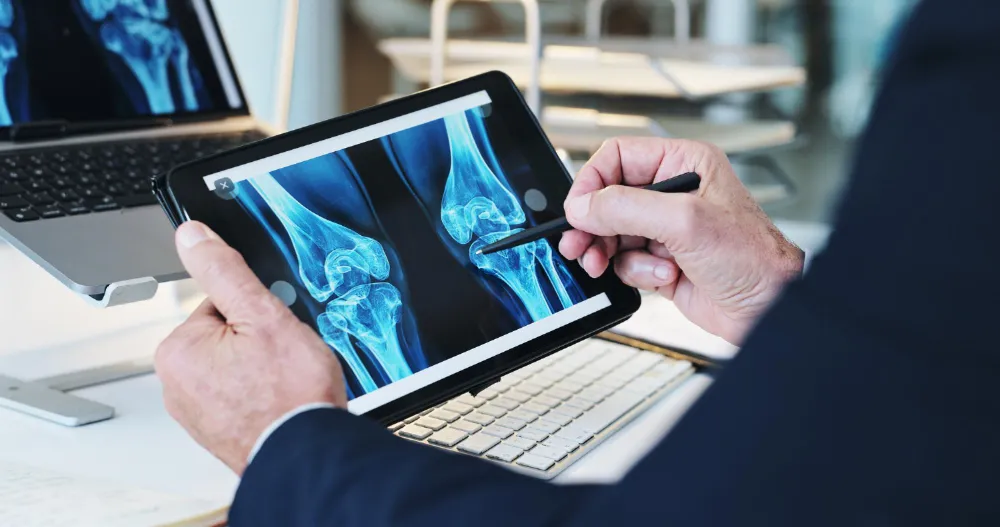
Echolight Scan in California vs. Traditional DEXA: What Patients Notice First
Most patients comparing an Echolight scan in California to a standard DEXA appointment notice the logistics before they notice anything technical. DEXA means finding an imaging center that takes the right insurance, booking around its hours, and often waiting weeks for an opening, especially outside major metro hubs. An Echolight scan in California, at least through a mobile provider, flips that arrangement entirely. The appointment happens wherever the patient already is, scheduled around their calendar instead of a radiology department’s.
The second thing patients tend to notice is how little the appointment itself resembles a medical procedure. There’s no changing into a gown, no holding still under an X-ray arm, no radiology tech stepping out of the room before triggering the scan. It feels more like a routine home visit than a hospital test, which matters for anyone who’s put off screening specifically because the process itself feels like a hassle. None of this changes the clinical purpose of the test, but it changes whether people actually follow through and get it done in the first place.
Who Should Consider an Echolight Scan in California
This isn’t a niche test reserved for one type of patient. Postmenopausal women remain the largest group getting screened, since estrogen decline accelerates bone loss significantly after menopause, but they’re far from the only ones who benefit. Men over 50 are increasingly getting tested too, a group that’s historically been underscreened despite carrying real fracture risk. Anyone with a family history of osteoporosis, a previous fracture from a minor fall, long-term steroid use, or a thyroid condition affecting bone metabolism has good reason to get a baseline.
Patients with metal implants or spinal hardware are another group for whom an Echolight scan in California solves a real problem, since traditional DEXA readings near hip replacements, knee replacements, or spinal fusion rods can be unreliable due to how X-rays interact with dense metal. And younger adults simply wanting a baseline before symptoms ever show up, along with corporate wellness programs looking to screen employees efficiently, round out who tends to book.
Athletes and active adults are a smaller but growing share too, particularly runners, cyclists, and former college athletes checking bone quality after years of high-impact training or, in some cases, a training history that involved extended low-calorie periods that put bone density at risk without anyone noticing at the time. None of these groups need a doctor’s referral to book an Echolight scan in California, which removes another common barrier that keeps people from getting screened until something has already gone wrong.
Where to Get an Echolight Scan in California Right Now
Superior Bone Scanning is based in Rolling Hills Estates and brings mobile Echolight scanning throughout Los Angeles and the surrounding Southern California communities, from the South Bay and Palos Verdes Peninsula out toward Pasadena, Santa Monica, Beverly Hills, and Long Beach. For residents in and around greater Los Angeles searching for an Echolight scan in California, that regional coverage is exactly the gap this service was built to close.
It’s worth being upfront about scope here too. A handful of other providers exist scattered across the state, mostly single locations in the Bay Area or smaller practices offering the technology as one service among many. Few, if any, are built specifically around bringing an Echolight scan in California directly to a patient’s home or workplace the way Superior Bone Scanning has, which is the differentiator that actually matters for someone tired of chasing down an appointment.
For patients outside the immediate Los Angeles service area but still within reach of Southern California, it’s worth reaching out directly rather than assuming coverage doesn’t extend that far. Mobile scheduling tends to be more flexible than a fixed-location imaging center, and routes often expand as demand for an Echolight scan in California continues to grow across the region.
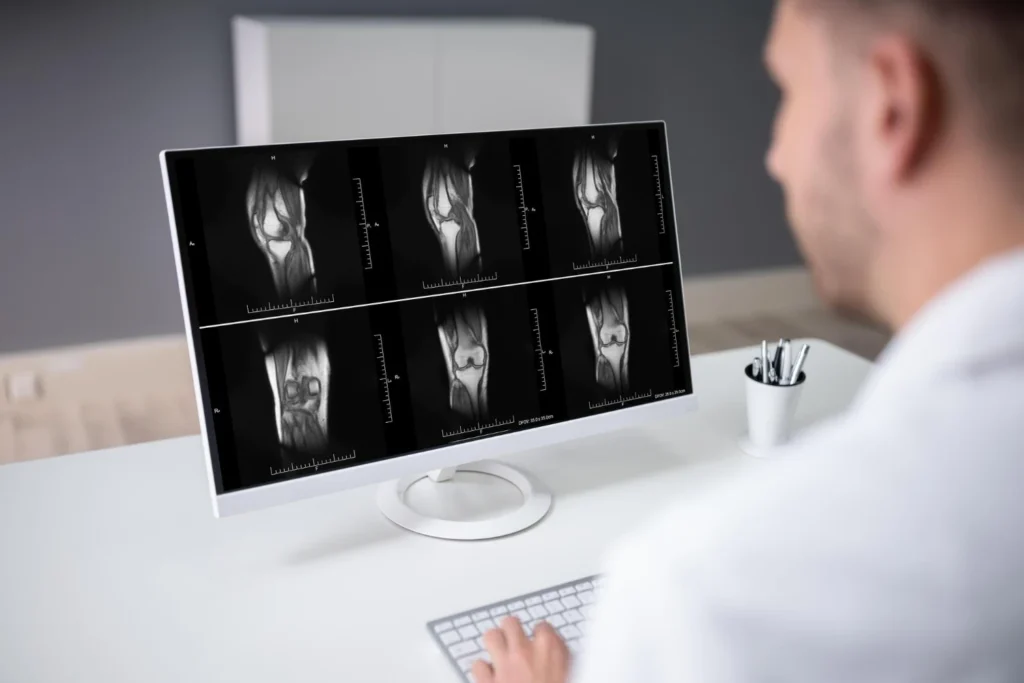
Fitting an Echolight Scan Into a Bigger Bone Health Plan
A single number, no matter how accurate, only goes so far on its own. What actually changes outcomes is what happens after the appointment, and this is where an Echolight scan in California through a service built around ongoing care tends to matter more than a one-off test at an imaging center that hands over a printout and moves on to the next patient.
Superior Bone Scanning pairs scan results with tailored exercise and supplement recommendations designed as an alternative to jumping straight to prescription medication where that’s medically appropriate. For someone with osteopenia caught early, that might mean a specific weight-bearing routine and a calcium and vitamin D plan built around their actual numbers rather than generic advice pulled from a pamphlet. For someone already managing osteoporosis, it means tracking whether a treatment plan, medical or otherwise, is genuinely moving the needle at the next scan rather than guessing.
What Happens During Your Echolight Scan Appointment
A technician arrives with the portable REMS device; no special preparation is required beyond wearing comfortable clothing without metal near the hip or lower back. The probe passes over each area for a minute or two while gentle ultrasound-based signals collect data on bone structure. There’s no discomfort involved, nothing to hold still under, and no radiation to account for afterward.
Results are reviewed in plain language rather than handed over as a printout full of jargon. For patients working with Superior Bone Scanning’s tailored exercise and supplement plans as an alternative to pharmaceutical treatment where appropriate, that conversation also covers what the numbers mean for next steps, not just what they are.
For a lot of patients, the emotional relief of the appointment matters just as much as the clinical result. Showing up somewhere unfamiliar for a medical test tends to add stress on top of whatever worry already exists about the results themselves. An Echolight scan in California that happens on a patient’s own couch, with a technician who explains each step before doing it, removes a layer of anxiety that a hospital radiology department simply can’t.
Echolight Scan Cost and Insurance Considerations
Pricing for an Echolight scan in California varies depending on whether insurance coverage applies, since REMS is newer than DEXA and coverage policies are still catching up in places. Medicare and many private insurers do cover bone density testing broadly, though it’s worth confirming REMS-specific coverage directly, since billing codes and provider recognition can differ from traditional DEXA. Superior Bone Scanning can walk through what that looks like for a specific situation before booking, which tends to be more useful than a generic price list anyway.
Self-pay patients often find an Echolight scan in California comparable to, and sometimes less than, what a DEXA scan costs out of pocket at a private imaging center once facility fees are factored in. Given that a single missed diagnosis can eventually lead to a fracture, a hospital stay, and months of recovery, the cost of screening tends to look small next to the cost of not knowing.
How Often Should You Get Rescanned
Most adults without major risk factors do well with a baseline scan followed by a repeat every one to two years. Anyone already diagnosed with osteopenia or osteoporosis, or currently on treatment meant to rebuild bone density, usually benefits from more frequent monitoring, often annually, to confirm the plan is actually working rather than assuming it is.
There’s no real downside to rescanning slightly earlier than the standard interval if something changes in the meantime: a new medication that affects bone metabolism, a fall, or simply a nagging concern that won’t go away. An Echolight scan in California, being radiation-free, removes the usual hesitation around getting tested more often than a DEXA-based schedule would typically recommend.
Talking to Your Doctor About an Echolight Scan
Bringing this up directly tends to go better than expected. Mention any prior DEXA results, family history, medications like long-term steroids or certain acid reducers known to affect bone density, and any metal hardware from past surgeries. A physician who understands REMS technology can help determine whether an Echolight scan in California fits into a broader treatment plan or stands alone as a screening tool, and most are receptive once a patient arrives with specific, informed questions rather than a vague request for “some kind of bone test.”
It also helps to bring along whatever a previous DEXA report actually said: T-score, Z-score, and any notes about artifacts or inconclusive regions. That context lets a provider compare results meaningfully rather than starting from zero, and it often speeds up how quickly a treatment or monitoring plan gets finalized.
Common Concerns Before Trying a Newer Bone Density Technology
It’s normal to feel a little hesitant about a technology that isn’t the one a doctor has used for decades. Patients considering an Echolight scan in California for the first time sometimes worry it’s too new to trust, or wonder whether a result will actually be taken seriously if it needs to go into a medical record alongside years of DEXA history.
Both concerns are reasonable, and both tend to resolve quickly once the research is laid out plainly rather than glossed over. REMS technology has been studied across multiple peer-reviewed journals, used in clinical settings internationally for years, and even adopted by NASA for monitoring astronaut bone health during spaceflight simulations, hardly a casual endorsement. Results also translate cleanly into the same T-score framework physicians already use, so there’s no awkward gap between an Echolight scan in California and whatever a patient’s existing medical history says. The unfamiliarity fades fast once someone actually sees how the numbers line up.
Conclusion
Finding an Echolight scan in California shouldn’t require weeks of searching, unanswered forum posts, or a drive to another part of the state. Superior Bone Scanning brings this radiation-free, research-backed technology directly to homes and offices throughout Los Angeles and the surrounding Southern California area, with the accuracy of a modern REMS device and none of the friction of a traditional imaging center appointment.
Whether the goal is a first-time baseline, a follow-up after a concerning DEXA result, or ongoing monitoring while managing osteopenia or osteoporosis, getting an accurate answer about bone health shouldn’t be this hard to arrange. As Los Angeles’s most trusted REMS bone scanning provider, Superior Bone Scanning has built its entire service around making that first appointment easy instead of one more thing to put off.
Frequently Asked Questions
What is an Echolight scan in California, exactly?
It’s a bone density test performed using Echolight’s REMS technology, which uses ultrasound-based radiofrequency signals instead of X-rays to measure bone density and quality at the hip and spine.
Is an Echolight scan as accurate as a traditional DEXA scan?
Research published in Aging Clinical and Experimental Research found that REMS achieved sensitivity and specificity above 91 percent compared to DEXA, with a strong correlation between the two methods.
Does an Echolight scan involve any radiation?
No. Unlike DEXA, which uses low-dose X-rays, an Echolight scan relies entirely on ultrasound-based signals, making it a genuinely radiation-free option.
Where can I get an Echolight scan in California?
Superior Bone Scanning offers mobile Echolight scanning throughout Los Angeles and the surrounding Southern California area, bringing the equipment directly to homes and offices.
How long does an Echolight scan take?
The scan itself typically takes just a few minutes once the probe is positioned over the hip and lower spine, with the full appointment usually wrapping up quickly.
Is an Echolight scan covered by insurance?
Many insurers, including Medicare, cover bone density testing broadly, though REMS-specific coverage can vary, so it’s worth confirming details directly before booking.
Can I get an Echolight scan if I have metal implants or spinal hardware?
Yes. Because REMS doesn’t rely on X-ray attenuation through dense material, it avoids the artifact issues that can make DEXA readings unreliable near metal hardware.
How often should I get an Echolight scan in California once I’ve had a baseline?
Most patients are advised to rescan every one to two years, though anyone actively managing osteopenia or osteoporosis often benefits from annual monitoring instead.