

Osteoporosis and genetics are more tangled together than most people realize, and that tangle usually stays invisible until someone in the family breaks a hip reaching for a jar on a low shelf. That was how it started for one of our Los Angeles clients: a 54-year-old woman came to us convinced her mother’s “bad bones” were simply bad luck. They weren’t. Once we walked her through a REMS bone density scan at her kitchen table, the picture got a lot clearer, and honestly, a lot more manageable.
If you’ve ever watched a parent or grandparent shrink a little each year, wince getting out of a chair, or fracture a wrist from what should have been a harmless fall, you’ve probably wondered whether that’s waiting for you too. It’s a fair question. Osteoporosis and genetics do share real, measurable ground, and researchers have spent decades mapping exactly how much of your bone strength was decided before you were even born.
This article walks through what the science actually says about osteoporosis and genetics, why family history carries more weight than most people realize, and how a modern REMS bone density scan gives you something a family story never could: a number. Not a guess. Not a vague warning. An actual, measurable picture of your bones today, right now, without a single second of radiation exposure.
What Does Genetics Actually Have to Do With Osteoporosis?
Let’s clear something up first, because it trips people up constantly. Osteoporosis and genetics don’t work like eye color, where one gene hands you a fixed outcome. Bone strength is polygenic, meaning dozens of genes each contribute a small piece to the final result, and then life layers on top of that. Diet, smoking, alcohol, hormone levels, medication history, and how active you were in your twenties all shape how that genetic blueprint plays out.
That said, the inherited piece is not small. Studies estimate that somewhere between 50 and 85 percent of your peak bone mass and bone mineral density is influenced by heredity. That’s a huge number, and it’s exactly why doctors ask “did your mother have a hip fracture?” before they ask almost anything else about your lifestyle. When we talk about osteoporosis and genetics with clients here in Los Angeles, this is usually the moment their whole posture changes. Suddenly it’s not abstract anymore.
The catch is that most people never get a straight answer about what their personal risk actually looks like in numbers. Genetics loads the gun, as the saying goes, but it doesn’t pull the trigger alone, and a REMS bone density scan is one of the few tools that can show you exactly where you stand right now rather than where a family story suggests you might end up.
The Genes Behind the Diagnosis: COL1A1, LRP5, and ESR1
If you dig into the research on osteoporosis and genetics, three genes come up again and again.
Collagen and the COL1A1 Gene
Your bones aren’t solid rock. They’re a collagen scaffold, mostly built from a protein encoded by the COL1A1 gene, with minerals deposited around that framework. Certain variants of COL1A1 produce weaker, thinner collagen strands, and researchers have linked specific mutations to early-onset osteoporosis that runs in families for generations, sometimes appearing decades before the typical postmenopausal timeline. It’s one of the clearest genetic threads tying osteoporosis and genetics research directly to the family patterns we see in clients every week.
LRP5 and Bone Density Regulation
The LRP5 gene helps regulate how your body builds and maintains bone density over your lifetime. Certain LRP5 variants, including a well-documented one called rs3736228, have been tied to a measurably higher risk of both low bone density and fracture, according to research published by the National Center for Biotechnology Information. It’s not destiny, but it’s a real, quantifiable nudge in the wrong direction.
ESR1 and Hormonal Bone Loss
The ESR1 gene affects how your bones respond to estrogen, which explains why bone loss so often accelerates hard and fast around menopause. Two women can eat the same diet, walk the same number of steps daily, and still lose bone at completely different rates because of how their ESR1 variant interacts with shifting hormone levels.
None of this means you’re powerless. It means osteoporosis and genetics work together as a starting point, not a verdict, and knowing your starting point is exactly what a REMS scan is built to reveal. That’s the polygenic nature of osteoporosis and genetics at work, dozens of small genetic nudges instead of one single cause.
Family History Isn’t a Life Sentence, But It Is a Warning
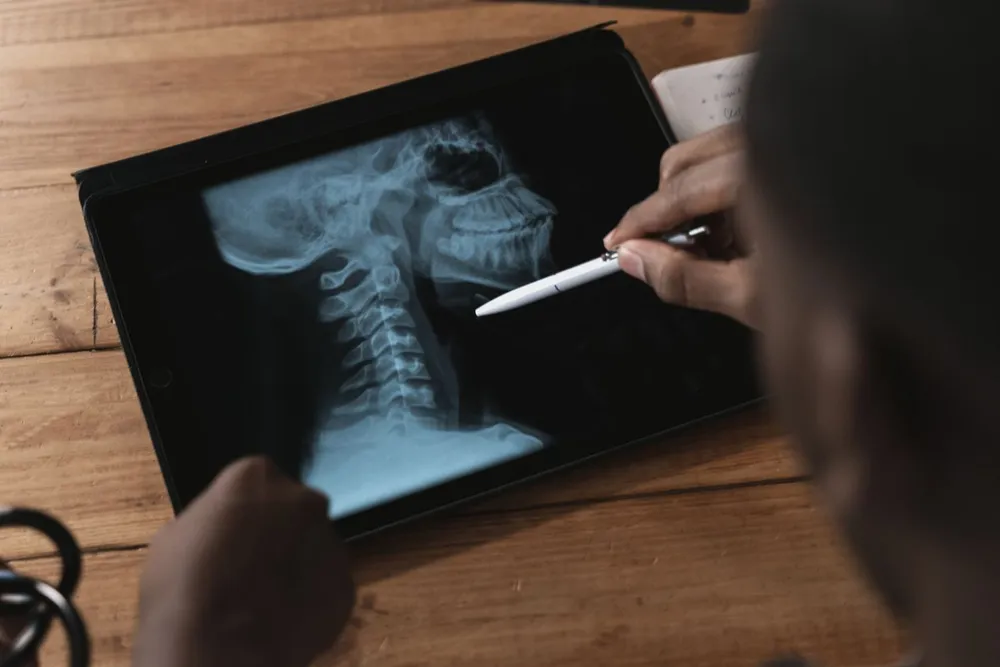
Here’s the part we wish more people understood before their first fracture instead of after it. If your mother, father, or sibling had a hip fracture, your own risk roughly doubles, according to research compiled by the Bone Health and Osteoporosis Foundation. That’s not a small statistical footnote. That’s a flashing warning light most families simply never notice because nobody connects the dots between grandma’s fracture and their own future.
We hear it constantly from clients across Los Angeles: “My mom had osteoporosis, but I figured that was just her.” Maybe. Or maybe osteoporosis and genetics were quietly setting the stage for you too, decades before your first symptom would ever show up on an X-ray.
The honest, sometimes uncomfortable truth is that family history should change your entire approach to bone health. It should move your first scan earlier. It should make weight-bearing exercise and calcium intake a priority in your thirties, not your sixties. And it should make a REMS scan part of your routine well before your doctor starts asking about it, because by the time symptoms appear, you’ve often already lost 20 to 30 percent of your bone density. Osteoporosis earns its nickname, the silent disease, honestly.
How Common Is Osteoporosis, and Why Do the Numbers Matter?
Osteoporosis and genetics don’t exist in a vacuum, so let’s put some real numbers next to the family stories. According to the Bone Health and Osteoporosis Foundation, roughly 10 million Americans already have osteoporosis, and another 44 million have low bone density that puts them at meaningfully elevated risk. Women make up close to 80 percent of those diagnosed, largely because of the estrogen-related bone loss tied to genes like ESR1 we mentioned earlier.
Here’s the number that tends to stop people in their tracks: one in two women and up to one in four men over 50 will break a bone because of osteoporosis at some point in their life. That’s not a rare disease hiding in the shadows. It’s closer to a coin flip for half the women you know, and a family history involving osteoporosis and genetics pushes those odds even further in the wrong direction.
The National Institute of Arthritis and Musculoskeletal and Skin Diseases (NIAMS) notes that bone density testing remains dramatically underused, even among people who clearly qualify for screening based on age or family history alone. Part of that gap comes down to access. Traditional DEXA scanning requires a referral, a radiology appointment, and often a multi-week wait, and a lot of people with a family history connected to osteoporosis and genetics simply let the appointment slide until something breaks.
This is exactly the gap a mobile REMS scan was built to close. When testing is fast, radiation-free, and delivered right at your kitchen table, the excuses that usually delay a diagnosis start disappearing.
Why a REMS Bone Density Scan Changes the Conversation
For years, the only mainstream option for checking bone density was a DEXA scan, which works well but comes with real friction: scheduling a radiology appointment, waiting weeks for an opening, sitting under X-ray radiation, and then waiting again for results to reach your doctor. None of that friction serves anyone well when time and convenience determine whether people actually get scanned at all.
A REMS bone density scan flips that entire experience. REMS stands for Radiofrequency Echographic Multi Spectrometry, an ultrasound-based technology that received FDA clearance for diagnosing and monitoring osteoporosis. Instead of X-rays, it uses radiofrequency ultrasound signals bounced off your lumbar spine and hip to measure bone density directly, with zero ionizing radiation involved.
No Radiation, No Waiting Room Anxiety
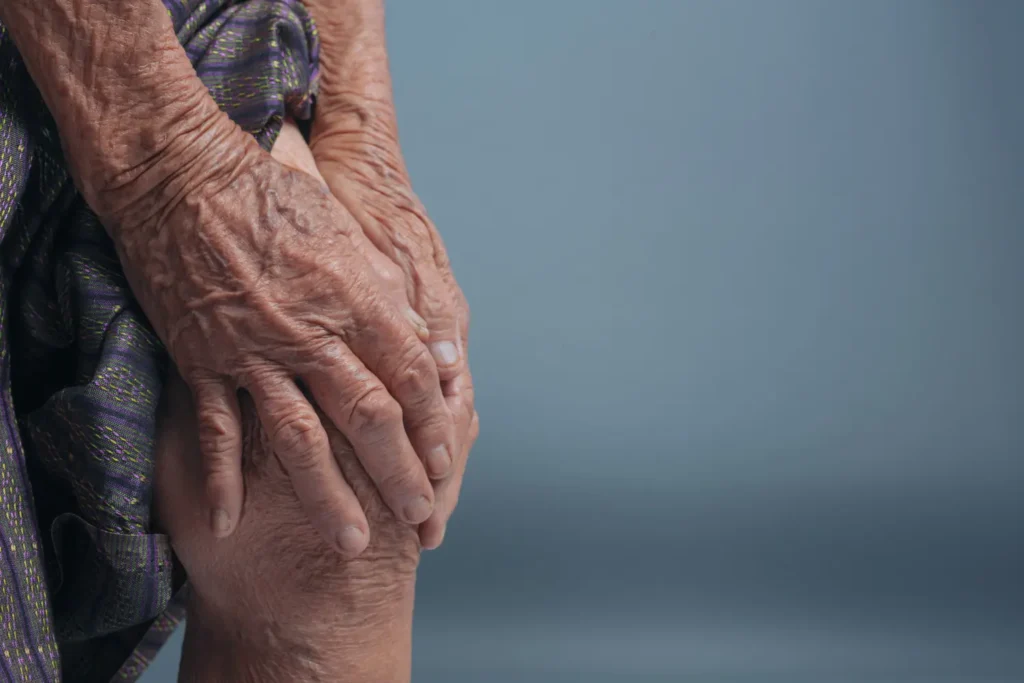
This matters more than people expect. This kind of scan can be performed safely on people who would otherwise need to avoid radiation exposure, and it takes just minutes per site with no special prep beyond a short fast beforehand. We bring the equipment straight to your home or office here in Los Angeles, which means no waiting room, no parking garage, and no rearranging your entire afternoon around a hospital appointment.
How REMS Stacks Up Against a Traditional DEXA Scan
DEXA still holds the title of clinical gold standard, and it isn’t going anywhere. But in practice, plenty of people simply never book that appointment, whether it’s scheduling friction, radiation concerns, or a referral that gets lost in the shuffle. Published research comparing REMS to DEXA has shown a strong correlation between the two across multiple patient groups, including people for whom DEXA isn’t always a comfortable option, like pregnant women or those with joint replacements that interfere with X-ray readings. For a technology built to catch the kind of risk that osteoporosis and genetics create in families, that accessibility gap matters just as much as the accuracy itself.
The Fragility Score: Seeing Beyond Density
Here’s the detail that genuinely excites us as practitioners. A REMS bone density scan doesn’t just spit out a density number. It also generates a Fragility Score, which evaluates the actual microarchitecture and quality of your bone tissue, not only how much mineral is packed into it, as detailed in clinical research published in Aging Clinical and Experimental Research. Two people can have nearly identical bone density readings and very different real-world fracture risk, and this is exactly the kind of nuance that a family history conversation alone could never uncover.
When someone already knows osteoporosis and genetics run through their family, this extra layer of detail isn’t a nice bonus. It’s the difference between guessing and actually knowing.
Osteoporosis and Genetics in Los Angeles: Why Lifestyle Still Matters
Genetics sets the stage, but Los Angeles life writes plenty of the script too. Long commutes on the 405 mean a lot of sitting. Desk jobs in Culver City and Santa Monica mean long stretches without weight-bearing movement. And plenty of health-conscious Angelenos who eat well and hit the gym still don’t realize that cardio-heavy routines do very little for bone density compared to resistance training and impact exercise.
This is exactly why we built our approach around personalized exercise and supplement plans rather than defaulting straight to pharmaceuticals. If your genetic risk is elevated, the right strength training routine, targeted vitamin D and calcium strategy, and consistent monitoring through REMS scanning technology can meaningfully change your trajectory. Osteoporosis and genetics might set your starting line, but they don’t have to determine your finish line, especially when you catch things early and respond with an actual plan instead of a prescription refill. Understanding osteoporosis and genetics side by side with everyday habits, like the ones shaped by Los Angeles commute culture, is what actually changes outcomes.
Finding a “REMS Bone Density Scan Near Me” That Actually Comes to You
If you’ve searched for a bone density scan near me in Los Angeles, you’ve probably noticed most results point you toward a hospital radiology department or an imaging center buried inside a medical plaza with a two-week waitlist. That’s part of why so many people with a family history of osteoporosis and genetics simply never get around to scheduling anything. Life gets in the way, and the friction wins.
We remove that friction. As Los Angeles’s most trusted REMS bone scanning provider, we bring the entire scanning process directly to your home or office, anywhere in the greater LA area. No referral maze, no radiology waitlist, no half day burned sitting in a waiting room. Just a quick, radiation-free scan on your own schedule, followed by a plan built around your actual results rather than a generic recommendation pulled from a chart.
Whether you typed “bone density scan near me” into Google at midnight after a worried scroll through a family health thread, or you’ve been putting off a scan near me search for months because of the hassle, the answer is the same either way: we come to you.
What Happens After Your REMS Bone Density Scan?
This is the part most bone density conversations skip entirely, and it’s honestly the most important one. A number on a page doesn’t help anyone unless someone explains what to actually do with it.
After your REMS scan results come in, we walk you through your results in plain language, not medical jargon that leaves you googling terms in the parking lot. If your results reflect the kind of risk that osteoporosis and genetics can produce in families like yours, we build a tailored exercise and supplement plan designed to slow or even reverse bone loss naturally. For a lot of clients, that means avoiding a lifetime of pharmaceutical side effects they’d been dreading since watching a parent go through the same thing.
We also recommend a follow-up scan on a regular schedule, because bone density isn’t a one-time report card. It’s a trend line, and trend lines are exactly what let you and your care team know whether your plan is actually working.
Real Alternatives to a Lifetime of Prescriptions
A lot of people assume that once osteoporosis shows up on a scan, medication is the only road forward. That’s not always true, and it’s certainly not the only conversation worth having. Plenty of bisphosphonates and other bone drugs come with side effects that range from mildly annoying to genuinely concerning for long-term use, and for people managing early-stage bone loss, there’s often room for a more natural approach first.
We specialize in exactly that: tailored resistance training programs, targeted supplementation, and ongoing REMS scan monitoring to track real progress instead of hoping for the best. When you understand how osteoporosis and genetics interact in your specific case, you and your care provider can make a genuinely informed decision about whether medication, lifestyle changes, or some combination of both makes the most sense for your body. The more you learn about osteoporosis and genetics in your own family, the easier that decision becomes.
Don’t Let Family History Stay a Mystery
Osteoporosis and genetics will keep showing up in family stories the same way they always have, quietly, in the background, until somebody breaks a bone and everyone starts asking questions they should have asked years earlier. You don’t have to wait for that moment. A REMS bone density scan gives you a real answer instead of a family rumor, delivered right at your kitchen table, with no radiation and no wasted afternoon in a waiting room.
If osteoporosis runs anywhere in your family tree, or if you’re simply tired of wondering instead of knowing, reach out to Superior Bone Scanning today. We’ll bring the scan to your home or office anywhere in Los Angeles, walk you through exactly what your results mean, and build a plan around your bones.
Is osteoporosis mostly genetic, or is it caused by lifestyle?
Both play a role, and neither tells the whole story on its own. Research suggests genetics accounts for roughly 50 to 85 percent of your peak bone density, but lifestyle factors like diet, exercise, smoking, and hormone levels determine how much of that genetic risk actually turns into diagnosed osteoporosis later in life.
If my mother had osteoporosis, would I definitely get it too?
No. Family history significantly raises your risk, and a parental hip fracture roughly doubles your own fracture risk, according to the Bone Health and Osteoporosis Foundation, but it’s not a guarantee. It’s a strong signal to get screened earlier and take preventive steps seriously, not a fixed outcome.
What genes are linked to osteoporosis?
The most studied genes include COL1A1, which affects collagen quality in bone tissue, LRP5, which regulates bone density formation, and ESR1, which influences how bone responds to estrogen. Researchers continue to identify additional contributing genes, since bone strength is polygenic rather than tied to a single gene.
How is a REMS bone density scan different from a DEXA scan?
A REMS bone density scan uses radiofrequency ultrasound rather than X-rays, meaning zero ionizing radiation exposure. It also produces a Fragility Score that evaluates bone microarchitecture and quality, not just density, giving a fuller picture of actual fracture risk.
Is a REMS bone density scan accurate?
Yes. REMS technology received FDA clearance for osteoporosis diagnosis and monitoring, and published clinical research has validated its correlation with DEXA results across multiple patient populations, including groups where DEXA use is limited or discouraged.
At what age should I get my first bone density scan if osteoporosis runs in my family?
Most guidelines recommend routine screening starting around age 65 for women and 70 for men, but with a documented family history tied to osteoporosis and genetics, we typically recommend a baseline scan in your 30s or 40s, so you have real data to track over time rather than starting from zero later in life.
Can exercise and supplements actually reverse bone loss, or only slow it down?
Depending on how early it’s caught, targeted resistance training and proper supplementation can meaningfully improve bone density readings over time, not just slow further decline. Early detection through REMS scanning makes a real difference in how much improvement is realistically possible.
Do you really bring the REMS bone density scan to my home or office in Los Angeles?
Yes. That’s the entire point of how we built Superior Bone Scanning. We bring the full REMS scanning setup directly to you anywhere in the Los Angeles area, so you get accurate, radiation-free results without taking half a day off work or sitting in a waiting room.